Why commercial sites here are different
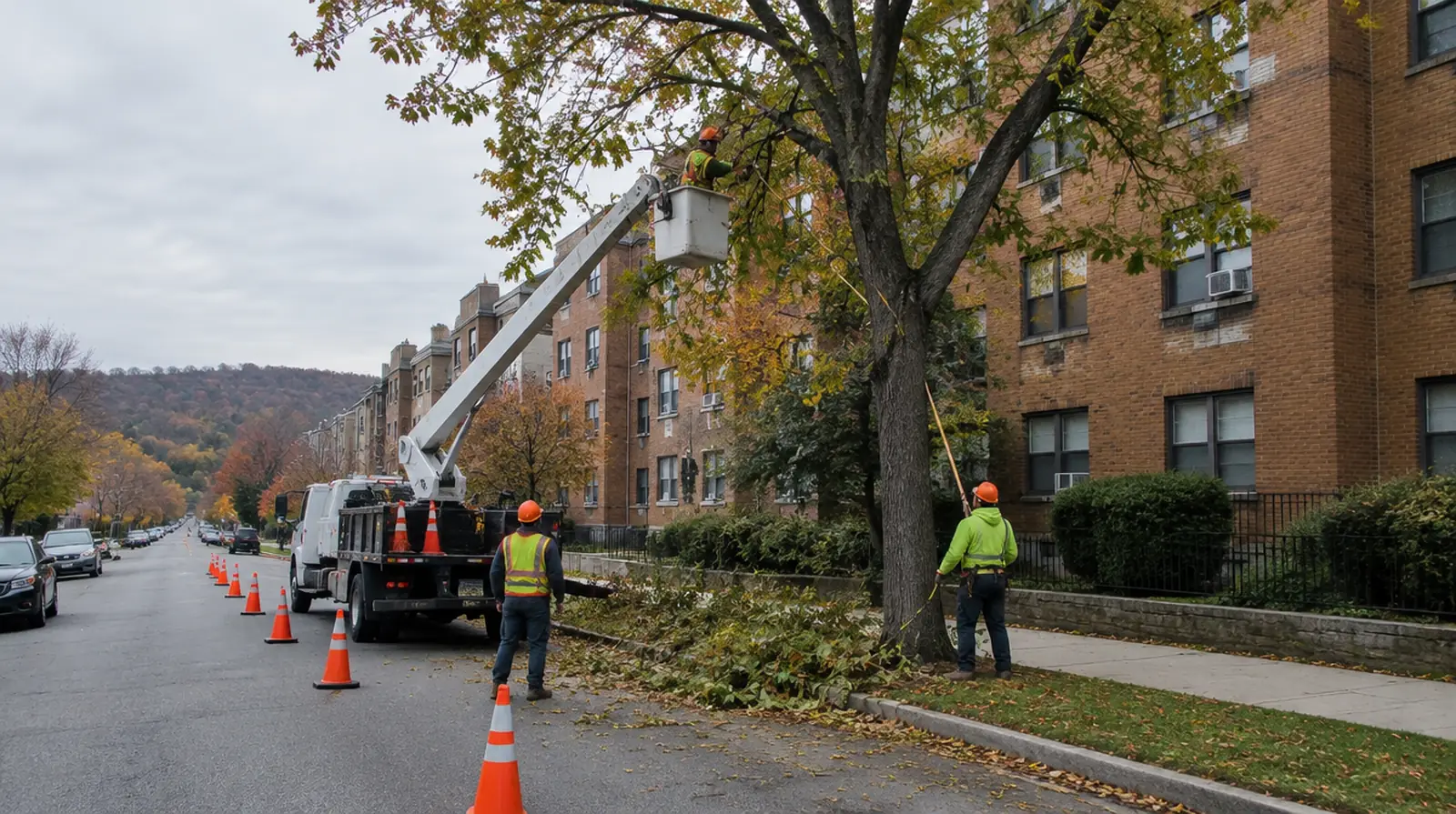
Kiryas Joel and the surrounding Orange County villages pack a lot of buildings onto small footprints. Trees stand close to walls, playgrounds, parking pads and overhead lines. A routine prune still needs traffic control, pedestrian detours and equipment that fits alleys most bucket trucks cannot enter. Property managers need predictable scheduling around school hours, prayer times and deliveries — not an open-ended crew that blocks a driveway all afternoon.
Ice storms and summer thunderstorms hit the Hudson Valley hard. Weak unions and deadwood over walkways become urgent the morning after. Having a commercial relationship in place means you are not starting from a cold call when a limb is down across a lot entrance.
What we handle for managers and boards
- Scheduled pruning cycles for street trees, courtyards and parking-lot islands.
- Sectional removals beside occupied buildings with protected roofs and windows.
- Storm cleanup and hazard mitigation after ice or wind events.
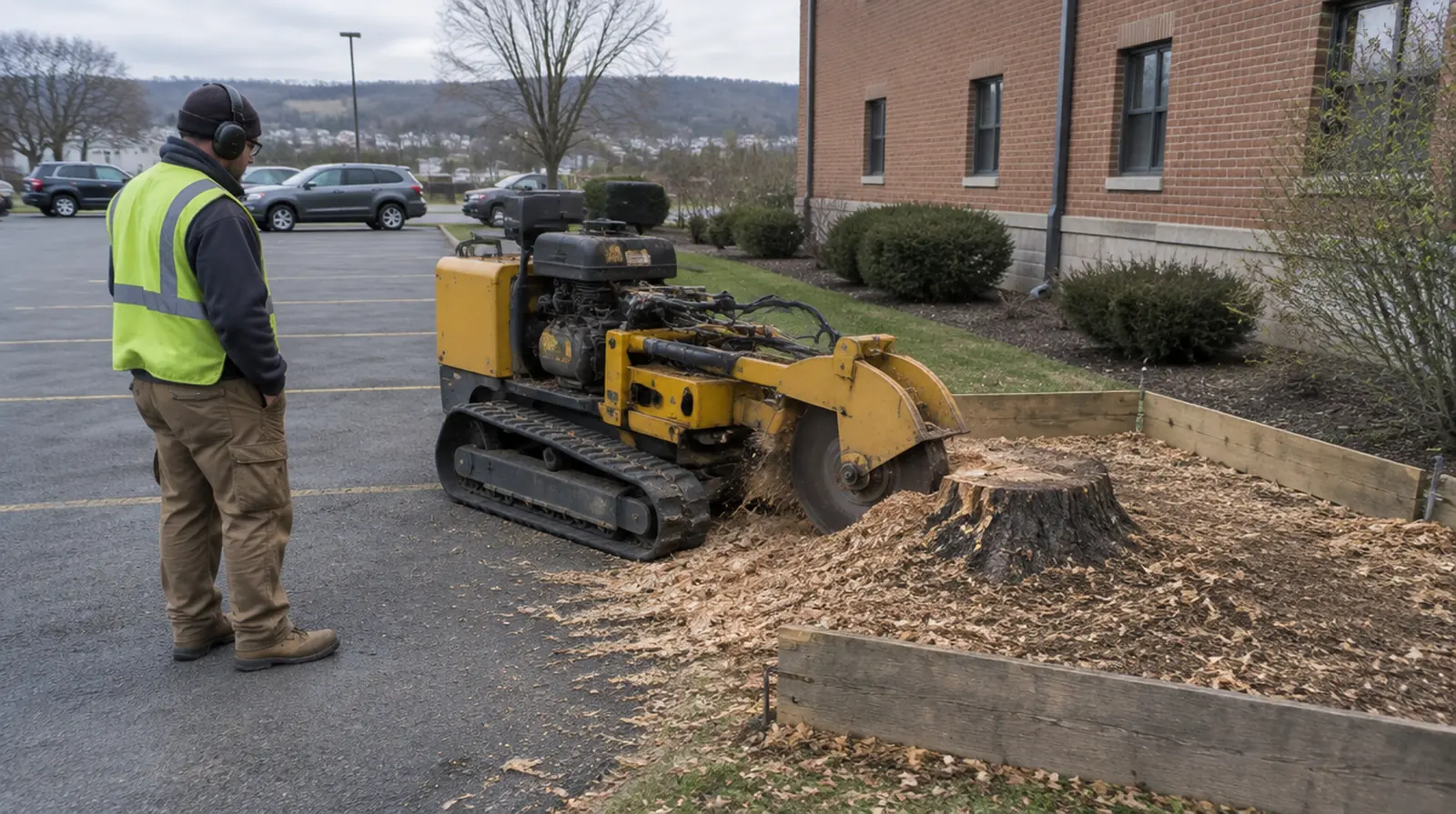
- Stump grinding and site cleanup ready for paving or new plantings.
- Written reports managers can share with boards or insurers.
Access, safety and neighbors
We stage compact lifts and climbing crews when streets are too tight for full-size trucks. Drop zones are planned so chips and wood do not spill into play areas. When a tree sits four feet from a facade — a common sight here — we dismantle in sections and lower pieces with ropes rather than risking a single heavy drop. Sidewalks stay usable whenever the work allows, with clear cones and spotters.
Species and local pressures
Maples, pears, pines and planted street trees dominate many blocks. Pear inclusions fail in wind; pines break under ice; maples drop large deadwood over paths. We prune for structure and clearance, not topping. Topping creates weak regrowth that fails sooner in the next storm. If a tree is simply the wrong species for a three-foot planting strip, we will say replacement is smarter than endless corrective pruning. New trees sized for constrained sites are covered under tree planting.
Contracts and response
Some sites want a twice-yearly prune and on-call storm response. Others need a one-time cleanup before a renovation. Either way you get a written scope, clear pricing and photos of hazards we recommend addressing first. Related residential work for nearby homeowners can be scheduled separately so commercial sites keep priority windows. For clearing brush ahead of construction, see land clearing.
Documentation boards expect
Managers often need before-and-after photos, a simple hazard list and a clear invoice tied to addresses or building numbers. We build that into commercial jobs so you are not chasing paperwork after the trucks leave. Multi-building campuses can be mapped on a single recurring schedule with seasonal priorities called out in advance.
When a removal opens a planting spot, we can coordinate a right-sized replacement so the courtyard does not sit empty through a full growing season.
Commercial tree service questions
Can you work before school drop-off hours?
Yes. Early windows are common so lots and walks are clear when children arrive.
Do you provide certificates of insurance?
Yes. We send current COIs to property managers on request before work begins.
How fast can you respond after a storm?
Clients with active agreements go first. After widespread ice events, we triage hazards that block access and threaten structures.