Planting for a growing village
Kiryas Joel is one of the most compact communities in Orange County. Homes and multifamily buildings sit close together, yards are small and many projects are new construction on graded lots. That makes tree planting both more important and more difficult. Trees bring shade to hot pavement, soften long building facades and give kids a cooler place to play, but they have to be chosen carefully so they do not crowd walls, balconies, sidewalks or overhead lines as they grow.
The village's zoning also expects shade trees with new development. Its code calls for at least one shade tree per dwelling unit, or one per 2,500 square feet of commercial floor area, with trunks of at least 2.5 inches and heights of 12 to 14 feet at planting, in locations approved by the Planning Board or directed by the Department of Public Works. We regularly help builders meet that requirement with healthy nursery stock, planted correctly and placed where the approved plans call for them. Always confirm the current rules for your project with the village before planting.
Choosing the right tree
Orange County sits in a cold climate, with snowy winters, hot and humid summers and soils that are often rocky glacial till or compacted construction fill. The right species depends on how much room there is above and below ground. For narrow strips beside walks, we often suggest smaller or upright trees such as Japanese tree lilac, serviceberry or upright hornbeam. Where there is more space, swamp white oak, honeylocust, Kentucky coffeetree and London planetree handle tough urban conditions well. We avoid ash, because emerald ash borer has killed ash trees throughout the region, and we avoid species with aggressive surface roots near paving.
We also think about the future. A tree that looks perfect at 12 feet may reach 50 feet in 25 years. We check distances to foundations, balconies, utility lines and neighboring trees so that what we plant today does not become a removal job later.
How we plant
- Site check. We look at sun, drainage, soil and available space, and mark underground utilities through Dig Safely New York before digging.
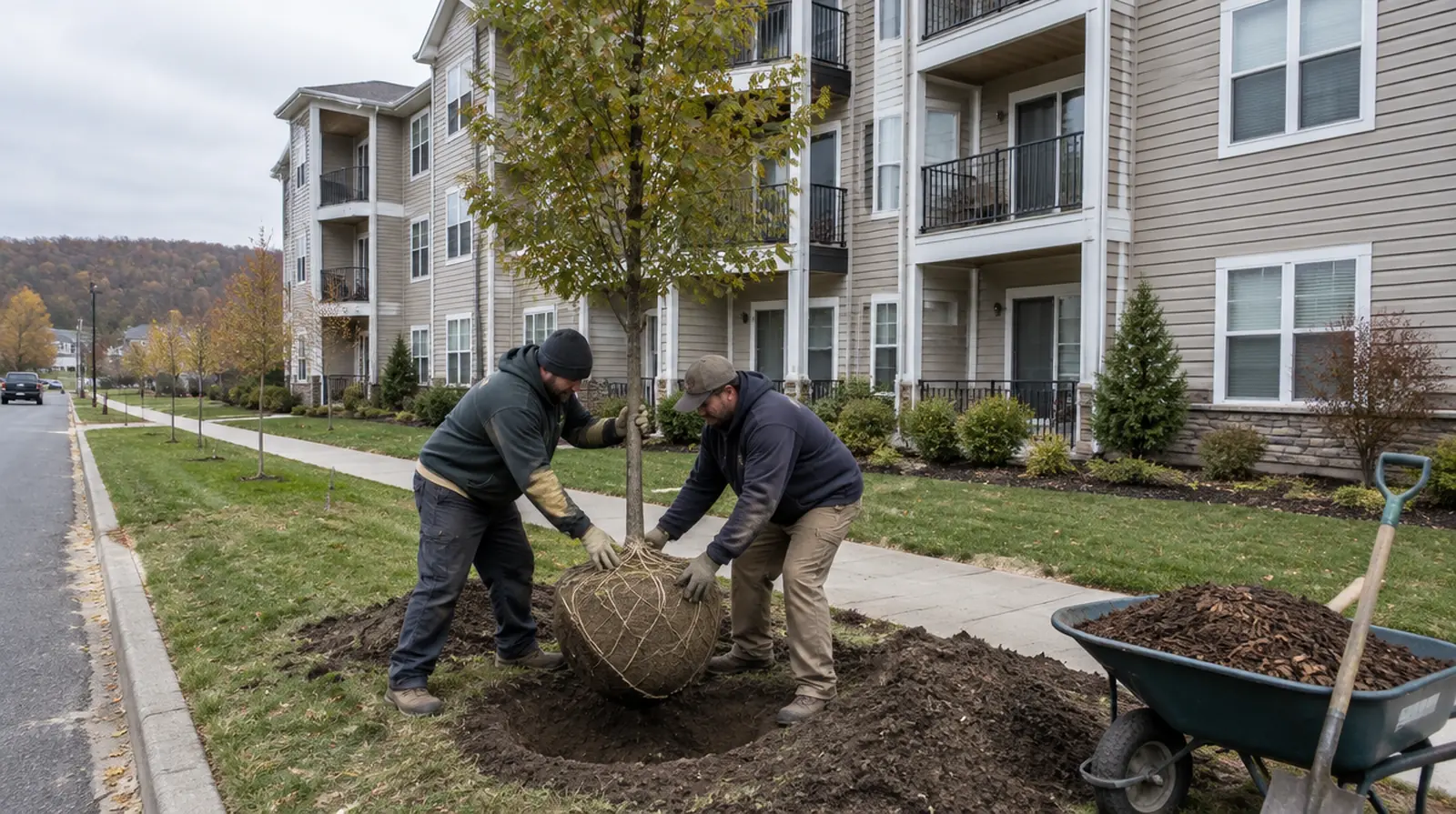
- Hole preparation. We dig a hole two to three times as wide as the root ball but no deeper, and loosen compacted fill around it so roots can spread.
- Setting the tree. The root flare sits at or slightly above grade. Burlap and wire are cut back from the top of the ball, and the hole is backfilled with the native soil.
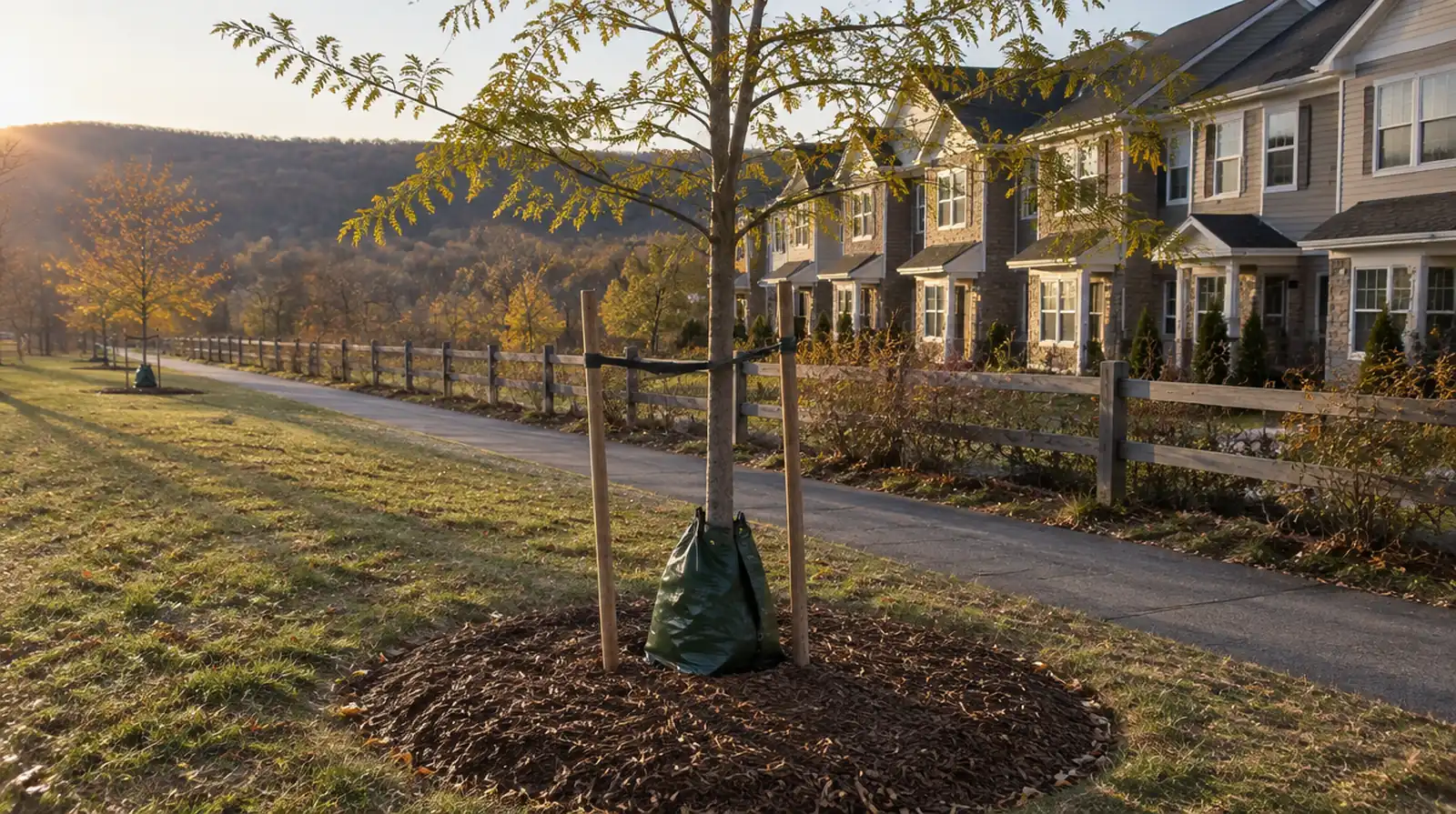
- Mulch and water. A wide ring of mulch, kept off the trunk, holds moisture. A slow watering bag helps through the first season.
- Staking if needed. On windy or exposed sites, soft straps hold the tree for one year, then come off.
Best times to plant
Spring, from about April into early June, and fall, from September until the ground freezes, are the best planting windows in the Hudson Valley. Cool air and moist soil let roots grow before summer heat or deep winter. We can plant in summer if a project requires it, but the tree will need more frequent watering.
Aftercare
New trees need about 10 to 15 gallons of water per week during their first two growing seasons when rain is scarce. Keep mowers and string trimmers away from the trunk, and refresh mulch each spring. We can return for a structural pruning visit after a couple of years to set up a strong branch structure. If an older tree is in the way of a new planting, our tree removal and stump grinding services can clear the spot first.
Working on active job sites
On new construction, we coordinate with the builder so trees go in after heavy equipment is done and final grading is finished, not before. Trucks and excavators compact the soil and can scrape bark, so planting too early often means replacing trees later. We bring the stock, plant, mulch and leave the site clean the same day.
Questions
Can you plant many trees for a new building?
Yes. We plant single trees for homes and larger groups for multifamily and commercial projects.
Do you guarantee the trees?
We explain our warranty terms in the written proposal, and they depend on aftercare and watering.
Not sure what to plant?
Book an arborist consultation and we will recommend species for your site. We also work in Monroe, Harriman and Woodbury.